In today’s digital-first era, enterprises face immense pressure to scale quickly while navigating an ever-changing landscape of regulations, risks, and compliance demands. From strict data privacy laws to escalating cybersecurity threats, organizations must protect sensitive information, ensure quality, and preserve their reputations all while managing complex global operations across diverse regulatory frameworks.
Traditional compliance methods, manual audits, periodic reviews, and siloed risk teams are no longer sufficient. These approaches are reactive, time-intensive, and resource-heavy, exposing businesses to penalties, reputational damage, and operational disruptions.
This is where Quality as a Service (QaaS) transforms the game. QaaS is a cloud-based, subscription-driven model integrating continuous quality, compliance, and risk monitoring into everyday operations. By leveraging automation, real-time dashboards, and proactive risk management, enterprises can stay compliant effortlessly while enhancing efficiency and driving innovation. With QaaS, compliance evolves from a disruptive, periodic task into a seamless, ongoing function.
What are the Compliance and Risk Challenges for the Enterprises?
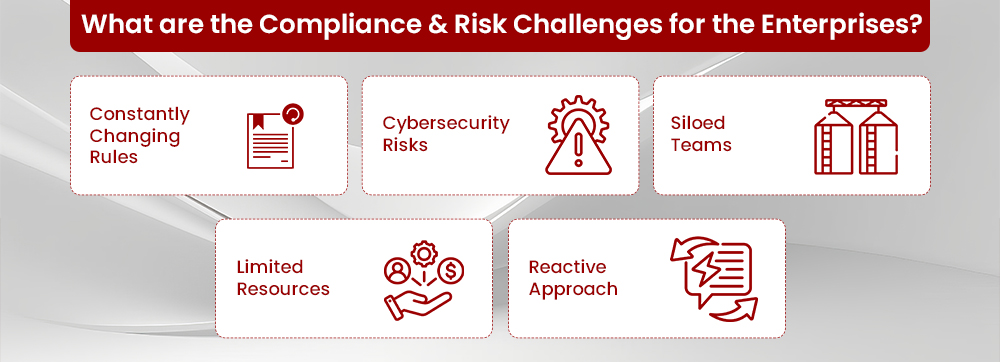
Today’s enterprises operate in a fast-changing environment where compliance and risk management are more challenging than ever. Organizations are expected to scale quickly, embrace digital transformation, and remain aligned with complex regulatory requirements. Some of the most pressing challenges include:
1. Constantly Changing Rules
Regulations never stand; they shift increasingly frequently across industries and regions. Laws like GDPR in Europe, HIPAA in U.S. healthcare, and AML/KYC in financial services demand constant vigilance. Enterprises risk fines, reputational setbacks, and missed opportunities without flexible systems.
2. Cybersecurity Risks
As companies move more of their operations to the cloud and SaaS platforms, they become prime cyberattack targets. Threats such as ransomware, insider breaches, and shadow IT are growing fast.
3. Siloed Teams
Compliance, risk, and operational teams still work separately in many enterprises. This fragmented approach creates blind spots and slows down responses to risks.
4. Limited Resources
Not every business can afford a large compliance department. Staying on top of global and cross-border risks can feel overwhelming for smaller teams.
5. Reactive Approach
Many organizations operate in firefighting mode—dealing with risks only after problems occur. This reactive stance often leads to costly penalties, operational disruption, and reputational damage. A proactive model is critical for long-term resilience.
These challenges underscore the need for modern solutions like Quality as a Service (QaaS), which helps organizations simplify compliance and strengthen real-time risk management.
How QaaS Helps with Compliance?
QaaS shifts compliance from a box-ticking exercise to a continuous, built-in function. Instead of relying on periodic reviews, it uses automation and real-time oversight to stay ahead of risks. Its key advantages include:
- Automated Compliance Checks: Reduce manual work and human error while boosting accuracy.
- Global Consistency: Ensure compliance across regions, industries, and cloud platforms (AWS, Azure, GCP).
- Real-Time Updates: Spot compliance issues early, before they escalate.
- Audit Readiness: Maintain automated logs and reports so audits are smooth and stress-free.
Example: A global bank running continuous KYC/AML checks through QaaS can flag anomalies instantly, rather than waiting for quarterly reviews. This reduces regulatory exposure and builds stronger trust with both regulators and customers.
QaaS for Risk Identification and Mitigation
QaaS goes beyond compliance by actively reducing risk exposure. It helps enterprises take preventive action instead of reacting after the fact. Capabilities include:
- Continuous Monitoring: Identify vulnerabilities through ongoing functional, security, and API testing.
- Risk-Based Testing: Focus resources on high-risk areas such as financial transactions or patient data.
- Scenario Testing: Simulate failures or cyberattacks to assess preparedness.
- Real-Time Dashboards: Provide leadership with a clear, consolidated risk view.
- Third-Party Oversight: Track vendor and partner compliance to reduce external risks.
- Operational Risk Orchestration: Align people, processes, and systems to adopt a preventive approach.
Integrating QaaS into Business Workflows
One of QaaS’s biggest strengths is how easily it integrates with existing systems. Rather than disrupting operations, it becomes part of daily business processes:
- CI/CD and DevOps: Run compliance checks as part of deployment pipelines.
- Cross-Team Collaboration: Give developers, security, and compliance teams a shared view.
- Cloud Flexibility: Support multi-cloud and hybrid environments seamlessly.
- Scalability: Start with IT and extend into HR, finance, logistics, and beyond.
- Real-Time Dashboards: Deliver insights that drive faster, more intelligent decision-making.
Benefits of QaaS
Enterprises adopting QaaS are seeing measurable gains in compliance, efficiency, and customer trust:
- Cost Efficiency
- Scalability and Flexibility
- Faster Time-to-Market
- Access to Expertise
Example: The use of Automate Pro for ServiceNow Automated Test Frameworks helped an International Government department save 95% of the time by running 15,000 test steps, covering 450 scenarios, and reusing 1,000 test blocks.
Future Trends in QaaS
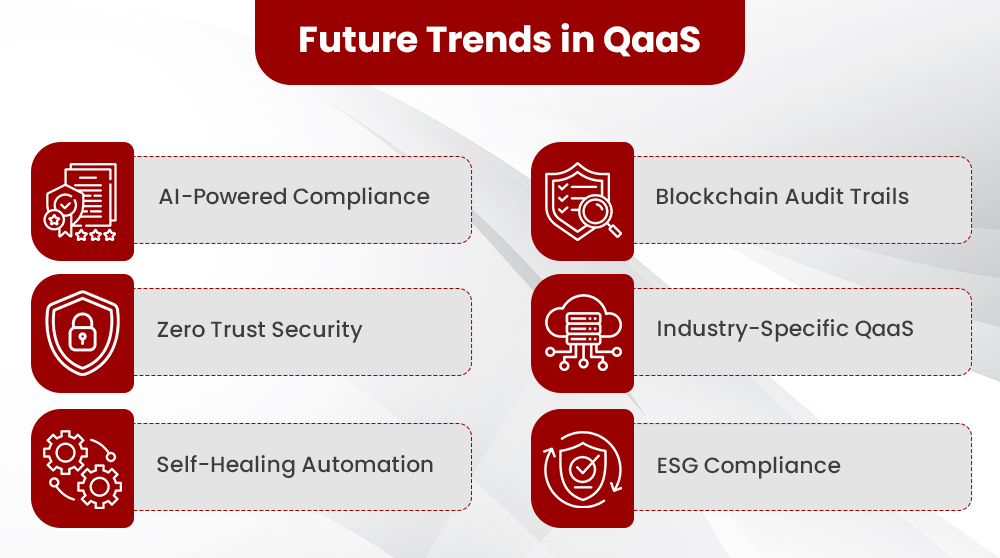
The QaaS model continues to evolve with new technologies that will make compliance and risk management even smarter:
- AI-Powered Compliance: Predictive analytics to detect risks before they happen.
- Blockchain Audit Trails: Transparent, tamper-proof compliance records.
- Zero Trust Security: Stronger, continuous access verification.
- Industry-Specific QaaS: Tailored frameworks for regulated industries like banking, healthcare, and biotech.
- Self-Healing Automation: Systems that detect and fix risks automatically.
- ESG Compliance: Greater adoption to meet sustainability and governance goals.
Conclusion
The traditional, reactive approach to compliance can no longer keep pace with today’s digital and global business environment. With regulations tightening, growing cyber risks, and shrinking resources, enterprises need more innovative strategies.
Quality as a Service (QaaS) provides exactly that, embedding compliance and risk management into everyday workflows, enabling continuous monitoring, and ensuring audit readiness. Organizations that adopt QaaS protect themselves and gain stronger trust, faster innovation, and long-term resilience.
In a world where compliance and quality are competitive differentiators, QaaS equips enterprises to stay ahead and thrive.
Simplify risk management, automate audits, and stay ahead of regulatory challenges with inMorphis’s QaaS solutions. Book a consultation today.
